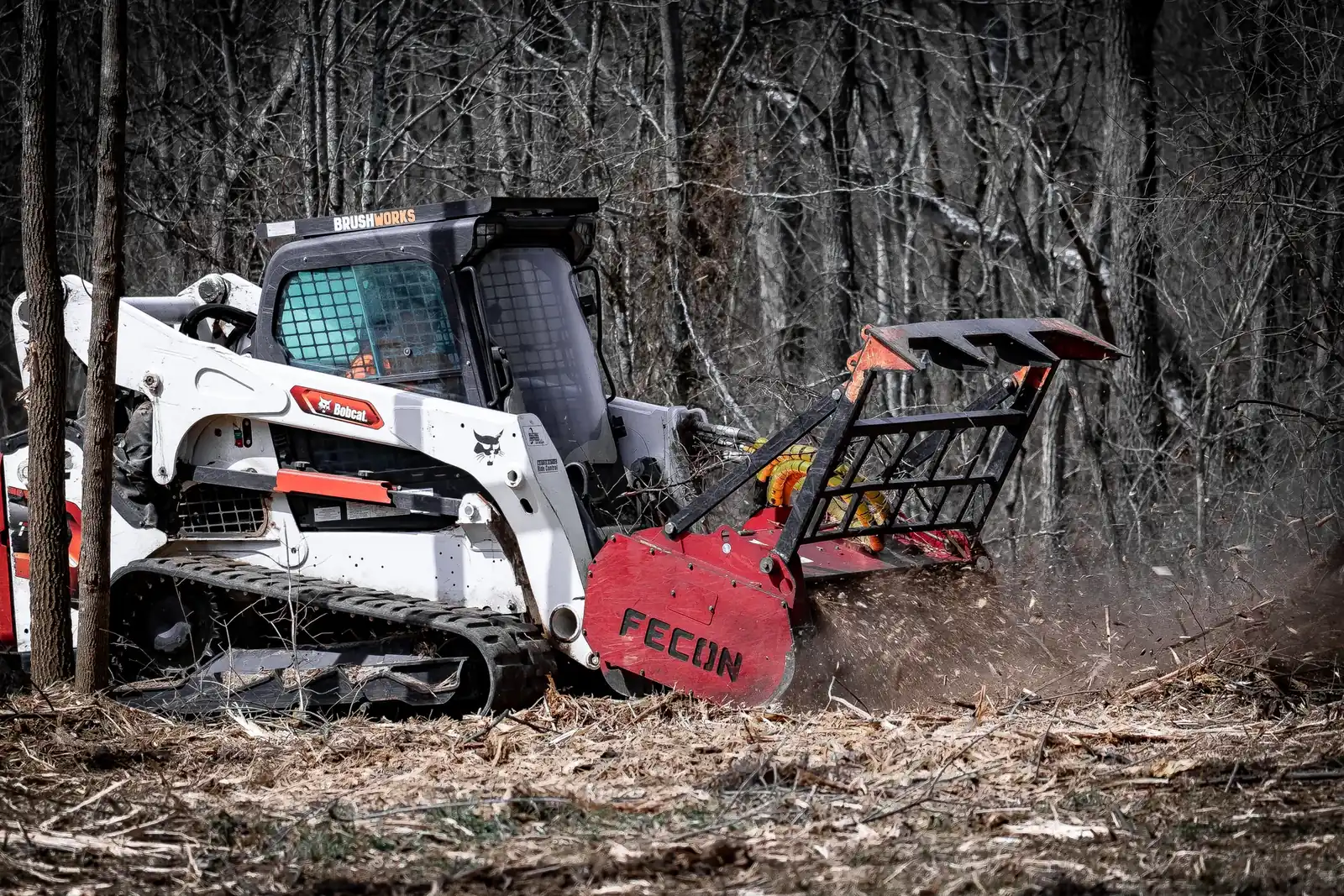
Kudzu Removal and Invasive Species Removal in Rutherfordton, NC
Kudzu, privet and honeysuckle cut back and mulched in place before they take over your property
Land clearing from $1,500 for the first visit. The final price depends on acreage, terrain and access; any return visit is quoted separately.
Invasive Species Are Destroying NC Properties
Kudzu, privet, Japanese knotweed, multiflora rose, and other invasive species spread aggressively across North Carolina. They smother native plants, damage structures, and reduce property values. Left unchecked, a small patch can take over acres in just a few seasons.
Brush Masters cuts back invasive growth with forestry mulching. Mulch is left in place; roots can survive and regrowth may require follow-up management. Mulching does not guarantee stump or root removal.
This page covers mixed invasive brush and overgrown property clearing, not guaranteed eradication. Treatment, root extraction and ongoing management are not implied by a mulching quote. Return visits are separately priced; confirm the first visit's work area, exclusions and any follow-up scope before work begins.
For plant-specific scope and regrowth questions, see our Kudzu removal guidance, Running bamboo removal guidance, and Invasive brush and privet guidance. These are species-focused sites from the same Brush Masters, not separate local operators. You can call or text us directly from this page; include your town, rough area, plant photos and equipment-access constraints.
Invasive Growth Removal Service Area
We serve a 50-mile radius around Rutherfordton, NC across five counties. If you're inside this circle we can usually be on-site within a week.
Rutherford County, NC
- Rutherfordton land clearing 0 mi
- Spindale land clearing 2 mi
- Forest City land clearing 4 mi
- Bostic land clearing 7 mi
- Henrietta 10 mi
- Caroleen 10 mi
- Ellenboro land clearing 11 mi
- Lake Lure land clearing 13 mi
- Chimney Rock land clearing 12 mi
- Union Mills land clearing 9 mi
- Cliffside land clearing 14 mi
Polk County, NC
- Mill Spring 11 mi
- Columbus land clearing 15 mi
- Tryon land clearing 19 mi
- Saluda land clearing 24 mi
Cleveland County, NC
- Mooresboro land clearing 16 mi
- Lattimore 18 mi
- Boiling Springs 22 mi
- Shelby land clearing 23 mi
Henderson County, NC
- Bat Cave 16 mi
- Edneyville 21 mi
- Hendersonville land clearing 29 mi
McDowell County, NC
- Marion land clearing 20 mi
- Old Fort 22 mi
Cherokee County, SC
- Gaffney land clearing 27 mi
Not sure if your address is in range? Call (828) 532-3671 or email us. Radius-based coverage means a few zip codes outside the circle still work if the route makes sense.
How Invasive Removal Works
Reclaim your land from aggressive invasive species
Species Identification
We identify the invasive species and determine the best removal approach
Mulching & Removal
Our equipment grinds above-ground growth into mulch left on site; roots may remain
Reclaimed Land
Your property is cleared, enriched with organic matter, and ready for native plants
Invasive Species We Remove
Common invasive plants threatening North Carolina properties
Kudzu
The "vine that ate the South" can grow up to a foot per day, smothering everything in its path
Chinese Privet
Forms dense thickets that crowd out native understory plants and wildlife habitat
Japanese Knotweed
Aggressive spreader with roots that damage foundations, pipes, and pavement
Multiflora Rose
Thorny thickets that spread rapidly and make land unusable for recreation or farming
Autumn Olive
Outcompetes native plants and alters soil chemistry with nitrogen-fixing roots
Bradford Pear
Once popular ornamental now recognized as highly invasive across the Carolinas
Kudzu Removal: How It Works and What to Expect
Kudzu regrows from its root crowns, so a single cut accomplishes little. We mulch the vine mass to ground level, which exposes the crowns and the ground under them, and leave the mulch in place. We do this kudzu removal across our 50-mile radius around Rutherfordton, in Rutherford, Polk, Cleveland, Henderson and McDowell counties.
What to expect: kudzu comes back. New runners can show up the same growing season, so plan on follow-up passes or a separate treatment program; mulching alone is not eradication, and any return visit is quoted separately.
What it costs: kudzu removal is priced like our other clearing work, by the area, how dense and tall the vine mass is, the slope and the access. The first visit starts from $1,500. Text photos of the patch with your town and rough area for a quote.
Invasive Growth Around the Foothills
Kudzu and bittersweet run heaviest on steep slopes and along the Rocky Broad; our pages on land clearing in Tryon and land clearing in Chimney Rock cover that ground. In the old mill villages it is mostly privet and greenbrier, as the page on land clearing in Cliffside explains.
To price a patch before you call, use the brush removal cost calculator.
Curious what this service costs on your land? Use our Instant Pricing Tool for a customized estimate based on acreage, brush density, and terrain.
Calculate My PriceRelated Services
Explore our other professional land clearing services in North Carolina
Invasive Growth Removal FAQ
Direct answers about pricing, equipment, service area, and process.
Amur honeysuckle, kudzu, multiflora rose, autumn olive, oriental bittersweet, privet, Tree of Heaven, English ivy, and others common to the western NC Foothills. We're equipped to handle dense stands and the mature, woody growth that mowers can't touch.
Invasive removal in the Rutherfordton area typically runs $2,000, $4,500 per acre depending on species and density. A follow-up herbicide application (where needed) is usually $200, $500 per acre and dramatically improves long-term results.
Mulching clears visible growth, but roots can survive and regrowth may require species-specific management. It is not guaranteed eradication. Confirm any treatment or root-removal scope separately rather than assuming it is included in clearing. Return visits are separately priced.
A 50-mile radius from Rutherfordton across Rutherford, Polk, Cleveland, Henderson, and McDowell counties. Lake Lure, Chimney Rock, Tryon, Saluda, Shelby, Mooresboro, Marion, and surrounding Foothills.
No, we walk the property with you before we start and flag specimens to preserve. Forestry mulching is precise enough to take out a clump of honeysuckle while leaving a young oak next to it untouched.
Regrowth depends on the species, season and site conditions. Mulching alone does not eradicate invasive plants; monitor the site and discuss an appropriate follow-up management plan.
Yes. We cut back kudzu across our 50-mile radius around Rutherfordton, in Rutherford, Polk, Cleveland, Henderson and McDowell counties. The vine mass is mulched to ground level and left in place. The root crowns survive, so plan on follow-up passes; any return visit is quoted separately.
Kudzu removal is priced by the area, how dense and tall the vine mass is, the slope and the access. The first visit starts from $1,500, and any return visit to cut regrowth is quoted separately. Text photos of the patch with your town and rough area for a quote.
The Foothills climate (mild winters, plenty of rainfall, long growing season) is ideal for the invasives that escaped 19th-century ornamental plantings. They outcompete native dogwoods, oaks, and rhododendron, change the soil chemistry, and reduce wildlife habitat. Removal isn't just cosmetic, it's restoration.
Ready to Eliminate Invasive Growth?
Our team is standing by to assess your property and provide a fixed-price quote.